Home / Topics / Hazard guides
Hazard guides · Guide
Wildfire: before, during, and after
Wildfires spread quickly and can devastate communities.
On this page: Before · During · After
Before
- Sign up for local alerts. Wireless Emergency Alerts need no sign-up.[1]
- Create a fire-resistant zone at least 30 feet from your home.[1]
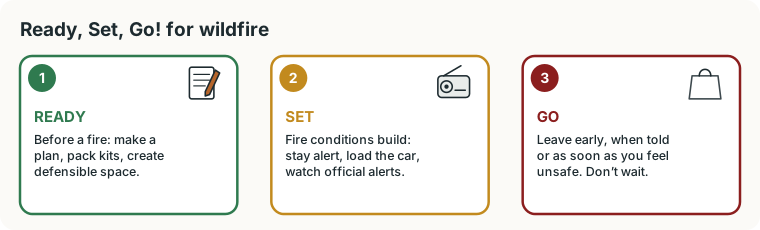
- Plan more than one route in different directions, and keep your tank at least half full.[2]
- Pack a Go-Kit (3 days of supplies) and a Stay-at-Home Kit (2 weeks).[3]
- Set up a room you can close off from outside air, with a portable air cleaner.[1] Store an N95 mask.[1]
During
- Evacuate immediately if authorities tell you to.[1] If you feel your location or route may become unsafe, don’t wait for an alert.[2]
- Authorities will say when to leave; the most important information comes from local government.[3]
- If you’re not ordered out but it’s smoky, stay inside with windows closed.[2]
- If trapped, call 911 and give your location, but response could be delayed or impossible. Turn on lights to help rescuers find you.[1]
After
- Don’t return until authorities say it’s safe.[1]
- Avoid hot ash, charred trees, smoldering debris, and embers; the ground may hold heat pockets.[1]
- Photograph damage, take inventory, and contact your insurer.[1]
- See returning home safely.
Official orders come first. If officials tell you to evacuate or shelter, do that. Not sure? Try the stay or go tool.
Related
Wildfire evacuation kit · Defensible space · Clean-air room · Scenario: evacuation warning
Sources
- FEMA / Ready.gov: Wildfires
- Utah DEM / Be Ready Utah: Wildfire
- American Red Cross: Wildfire Safety
Official pages checked 14 November 2026. Guidance changes; follow your local officials first. How we research.
Page checked on · Change log · Report an error · Calm by design