Home / Topics / Hazard guides
Hazard guides · Guide
Winter storms and extreme cold: before, during, and after
Winter storms raise the risk of crashes, hypothermia, frostbite, carbon monoxide poisoning, and heart attacks from overexertion.
On this page: Alerts · Before · During · Warning signs
Alerts
A Winter Storm Watch usually comes 12–48 hours ahead; a Warning usually 12–24 hours ahead and means hazardous weather is imminent or happening. Under a warning, find shelter right away.[1]
Before
- Insulate, caulk, and weather-strip, and learn how to keep pipes from freezing.[1]
- Install and test smoke and CO alarms with battery backup.[1]
- Build a car kit with jumper cables, sand, a flashlight, warm clothes, blankets, water, and snacks.[1] Full list: winter vehicle kit.
During
- Stay off roads if you can. If trapped in your car, stay inside.[1]
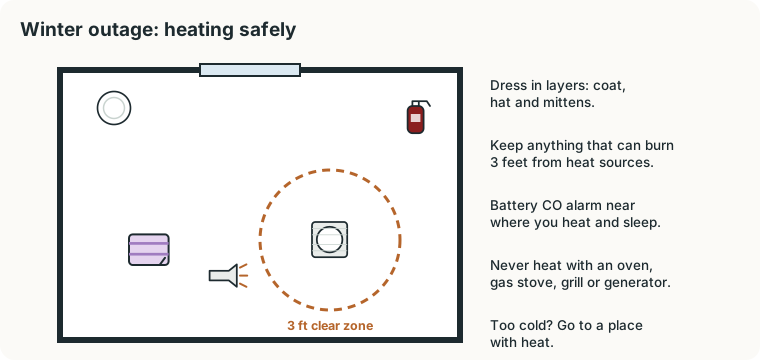
- Use generators and grills only outdoors, and never heat your home with a gas stove or oven.[1] Generators go 20 feet from windows, doors, and attached garages.[1]
- Limit time outside and dress in layers.[1]
- Avoid overexertion when shoveling.[1]
Warning signs
Frostbite: numbness and white, grayish-yellow, firm, or waxy skin. Hypothermia: a temperature below 95°F is an emergency; signs include shivering, confusion, slurred speech, and drowsiness.[1]
Treatment steps for injuries and illness are first-aid content that waits for qualified review. In an emergency, call 911.
Official orders come first. If officials tell you to evacuate or shelter, do that. Not sure? Try the stay or go tool.
Related
Winter vehicle kit · Power outages · Scenario: winter storm
Sources
- FEMA / Ready.gov: Winter Weather
Official pages checked 14 November 2026. Guidance changes; follow your local officials first. How we research.
Page checked on · Change log · Report an error · Calm by design