Kit guide · Shelter in place
Wildfire smoke clean-air kit
Clean air in one room when smoke rolls in, set up before fire season.
How to use this guide: follow the steps, tick off the checklist, then print it . The printout has no shopping links.
Stay-Go Guide · Wildfire smoke clean-air kit · Checked: ____________
What to do
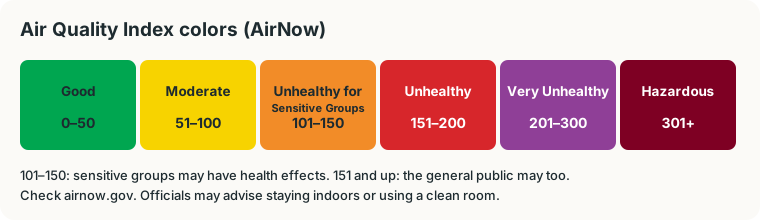
- Know the numbers. AirNow’s Air Quality Index runs from Good (0–50) to Hazardous (301+). Above 100, air is unhealthy, first for sensitive groups and then for everyone.[1]
- Pick a clean room now. EPA: one big enough for everyone, such as a bedroom with an attached bathroom, that you can keep closed.[2]
- When smoke comes: close the room’s windows and doors (without blocking your way out), run a portable air cleaner continuously on high, and set HVAC or window AC to recirculate.[2]
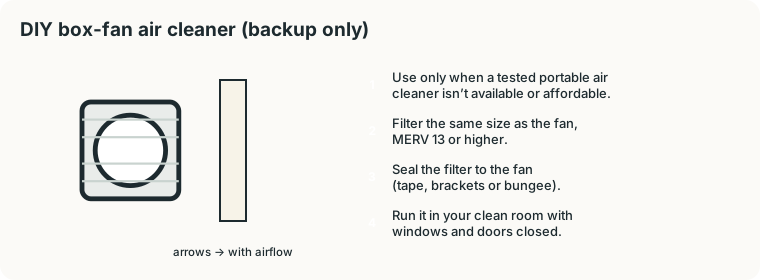
- DIY backup only. A box fan with a MERV 13 filter is a temporary option when a tested air cleaner isn’t available or affordable.[2]
- Be ready to leave. Conditions change quickly. If you can’t stay cool, the power goes out, or too much smoke gets in, go elsewhere.[2] See the clean-air room guide.
The checklist
Quantities come from the source cited beside them. † marks our packing suggestion where the official list gives no number.
| Item | How many | Why | |
|---|---|---|---|
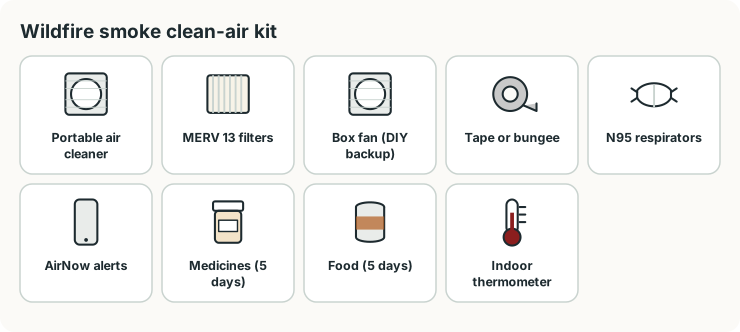
| Portable air cleaner (one that does not produce ozone) | 1 for the clean room | EPA: run it continuously on the highest setting; pick one that does not produce ozone.[2] | |
| Spare filters for the air cleaner or HVAC | 2 or more† | EPA: during heavy smoke, replace filters more often than the maker recommends.[2] | |
| MERV 13 (or higher) furnace filter for HVAC | As your system takes | EPA suggests MERV 13 or higher if your system can use it; ask an HVAC technician.[2] | |
| Box fan and same-size MERV 13 filter (DIY backup) | 1 set | Temporary only; align the filter arrows with the airflow and seal it to the fan.[2] | |
| Tape, brackets, or bungee cord | 1 | For attaching the filter to the fan.[2] | |
| N95 respirators | 1 or more per person | Ready.gov: store an N95 to protect from smoke.[3] | |
| Food and medicine | At least 5 days | EPA: have at least a 5-day supply of food and medication.[2] | |
| A way to get alerts and air quality | Phone alerts on, or a radio | EPA: know how you will get emergency alerts and health warnings.[2] |
Nice to have (not on the official lists)
Optional extras we think are useful. They are our suggestions, not agency recommendations.
| Item | How many | Why | |
|---|---|---|---|
| Indoor air quality monitor | 1 | Shows whether your clean room is working. Not an official requirement. | |
| Door draft stopper | 1 | Helps keep the clean room door gap closed. |
Asthma, heart, or lung disease? EPA says to talk with your health care provider about what to do during smoke.[2] Children, older adults, and people with heart or breathing problems may benefit most from a clean room.[2]
Shop this list
Affiliate disclosure: the shopping links below are Amazon affiliate links. As an Amazon Associate we earn from qualifying purchases, at no extra cost to you. They are generic search links, not endorsements of a brand. Full disclosure.
These are generic Amazon searches, not picks of a specific brand. Compare ratings, check what fits your household, and buy only what you don’t already own. Most of this list can come from around your home.
Sources
- U.S. EPA / AirNow: AQI Basics
- U.S. EPA: Create a Clean Room to Protect Indoor Air Quality During a Wildfire
- FEMA / Ready.gov: Wildfires
Official pages checked 14 November 2026. Guidance changes; follow your local officials first. How we research.
Page checked on · Change log · Report an error · Calm by design