Home / Topics / Light and power
Light and power · How-to
Carbon monoxide safety in an outage
The invisible danger of every power outage.
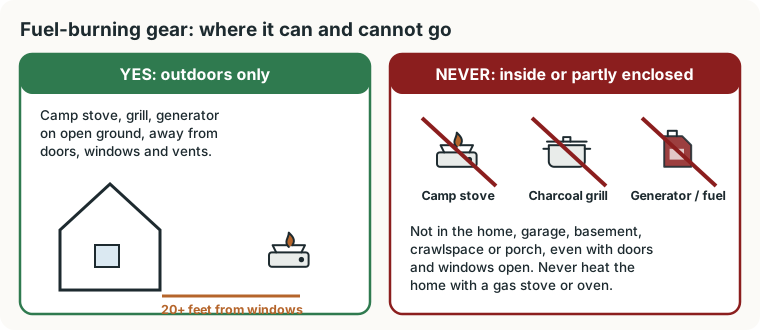
Carbon monoxide is a colorless, odorless gas that can kill you, your family, and your pets.[1] You can’t see or smell it, and it can quickly cause full incapacitation and death.[2]
Symptoms
CPSC lists headache, dizziness, weakness, nausea, vomiting, sleepiness, and confusion.[3]
If you suspect CO poisoning or your alarm sounds: get outside to fresh air immediately, then call 911.[3] Stay in the fresh air until emergency personnel arrive.[2]
CO alarms
- Install battery-operated CO alarms, or alarms with battery backup, on every level of the home and outside sleeping areas.[3]
- Interconnected alarms are best: when one sounds, they all sound.[3]
- Test the batteries frequently and replace them when needed.[2]
Common causes during emergencies
- Generators, grills, camp stoves, and other gasoline, propane, natural gas, or charcoal devices used inside a home, garage, basement, crawlspace, or partly enclosed area.[2]
- Using a gas stove or oven to heat your home.[1]
- Gas heaters without proper ventilation. Be Ready Utah: only use gas heaters with proper ventilation.[4]
Sources
- FEMA / Ready.gov: Power Outages
- American Red Cross: Safe Generator Use
- U.S. Consumer Product Safety Commission: Carbon Monoxide Information Center
- Utah DEM / Be Ready Utah: Light & Power (12 Areas)
Official pages checked 14 November 2026. Guidance changes; follow your local officials first. How we research.
Page checked on · Change log · Report an error · Calm by design