Home / Topics / Shelter in place
Shelter in place · How-to
How to seal a room to shelter in place
Plastic sheeting and duct tape, cut and labeled before you need them.
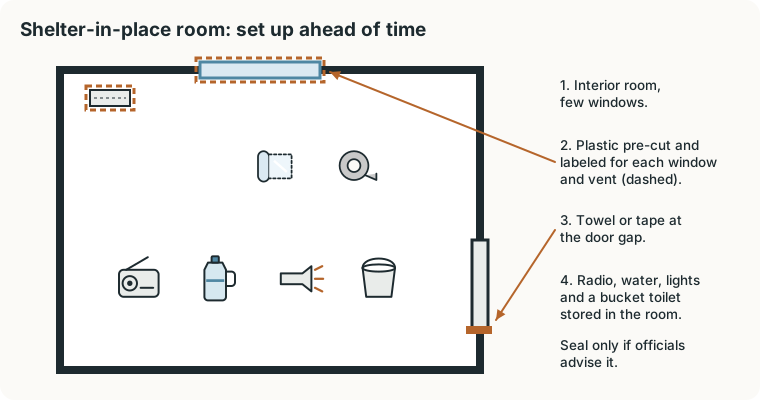
Ready.gov calls sealing a room a temporary protective measure that creates a barrier between you and contaminated air outside. It takes planning: buy the plastic and tape ahead of time.[1]
Ahead of time
- Pick an interior room with few windows.[1] For a chemical release, Ready.gov says choose an above-ground room with as few openings as possible.[2]
- Measure every window, door, and vent. Cut plastic sheeting several inches wider than each opening and label each sheet.[1]
- Know how to operate your home’s ventilation system.[2]
- Store the sheeting, tape, and supplies in that room: see the room kit.
When officials say to shelter in place
- Bring everyone inside, including pets.[3]
- Lock doors; close windows, air vents, and fireplace dampers.[1]
- Turn off fans, air conditioning, and forced-air heating.[1] Or set ventilation to 100% recirculation so no outside air comes in.[2]
- Take your emergency kit into the room unless you think it’s contaminated.[1]
- Seal windows, doors, and vents with the plastic: tape the corners first, then all edges.[1]
- Seal gaps with wet towels, plastic, tape, wax paper, or foil. Seal stove and dryer vents too.[2]
- Listen to the radio or TV. Don’t go outside until authorities say it is safe.[2]
Sources
- FEMA / Ready.gov: Shelter
- FEMA / Ready.gov: Chemical Emergencies
- American Red Cross: Chemical Emergency
Official pages checked 14 November 2026. Guidance changes; follow your local officials first. How we research.
Page checked on · Change log · Report an error · Calm by design