Home / Topics / Southern Utah hazards
Southern Utah hazards · How-to
Slot canyons and the Zion Narrows: flash flood safety
Check before you go.
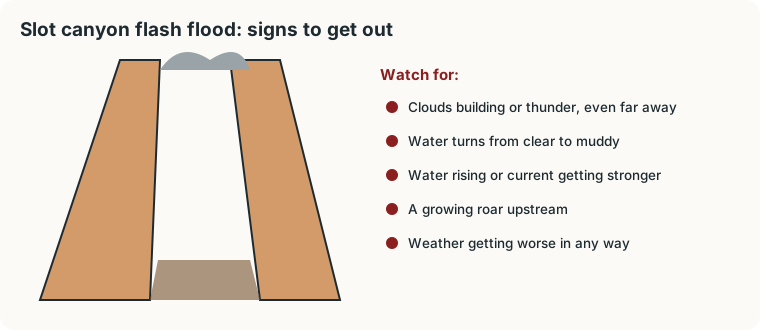
Zion National Park says flash floods are a sudden increase in the depth and speed of water in rivers, streams, or washes from heavy thunderstorm rain. The water carries debris like tree trunks and boulders, and flash floods can happen at any time in the park and the desert southwest.[1] Monsoon season runs July to September.[1]
Before you go
- Check the flash flood forecast. The NWS issues flash flood potential forecasts; stop by a visitor center or check online.[2] Forecasts: NWS Salt Lake City.
- Know the closures. The Narrows closes when the NWS issues a Flash Flood Warning and stays closed for at least two hours after it’s lifted. It also closes in spring when snowmelt raises the river above 150 CFS.[2]
- Dress for cold water. Canyon walls and cold water make it cooler than elsewhere in Zion Canyon. Wear layers and quick-drying fabric, and avoid cotton, which gives no insulation when wet.[2][1]
- Wear closed-toe shoes and carry a sturdy stick. NPS compares the riverbed to walking on wet bowling balls.[2]
- Carry water and food. At least one gallon per person per day in the desert.[1]
On the trail
- NPS lists flash floods, cyanobacteria, slips, falls, and hypothermia as hazards, even on short trips.[2]
- Immersion in water is the quickest way to lose body heat, and hypothermia is a major hazard in narrow canyons.[1]
- Flash floods can happen within minutes, sometimes with no sign of rain where you are.[4]
Driving
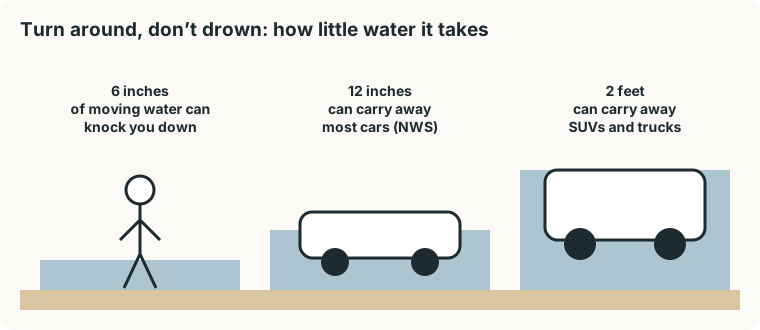
Turn around, don’t drown: 12 inches of rushing water can carry away most cars.[5]
Treating hypothermia or heat illness is first-aid content, which waits for qualified review. Call 911 in an emergency.
Sources
- National Park Service, Zion: Safety
- National Park Service, Zion: The Narrows
- NOAA National Weather Service: NWS Salt Lake City forecast office
- Utah DEM / Be Ready Utah: Flood
- NOAA National Weather Service: Turn Around Don't Drown
Official pages checked 14 November 2026. Guidance changes; follow your local officials first. How we research.
Page checked on · Change log · Report an error · Calm by design