Home / Topics / Hazard guides
Hazard guides · Guide
Floods and flash floods: before, during, and after
Floods are the most common disaster in the United States.
On this page: Before · Watch vs warning · During · After
Before
- Floods are the most common U.S. disaster, and flooding doesn’t follow lines on a map.[1]
- Get flood insurance; homeowner’s policies don’t cover flooding, and coverage typically takes up to 30 days to start.[1]
- Pick a place on higher ground you can reach quickly.[2]
- Keep documents in a waterproof container. Consider check valves and a sump pump with battery backup.[1]
Watch vs warning
A flood WATCH means flooding is possible. A WARNING means flooding is happening or will happen soon: take immediate precautions.[2]
During
- Evacuate immediately if told to. Never drive around barricades.[1]
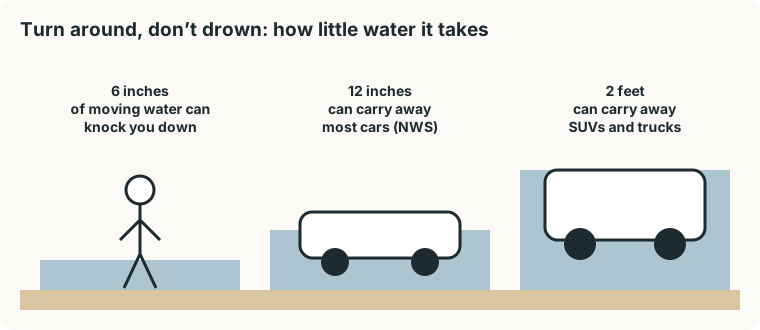
- Six inches of moving water can knock you down; one foot can sweep your vehicle away.[1]
- Stay off bridges over fast water.[1]
- If your car is trapped in rapidly moving water, stay inside; if water rises inside, get on the roof.[1]
- If trapped in a building, go to the highest level, but not into a closed attic.[1]
After
- Return only when authorities say it’s safe.[1]
- Avoid downed power lines.[2] Don’t touch wet electrical equipment.[2]
- Wear boots, gloves, eye protection, and an N95 for cleanup.[2]
- See returning home safely.
Official orders come first. If officials tell you to evacuate or shelter, do that. Not sure? Try the stay or go tool.
Related
Slot canyons and the Narrows · Scenario: flash flood warning · Flood insurance and documents
Sources
- FEMA / Ready.gov: Floods
- American Red Cross: Flood Safety
Official pages checked 14 November 2026. Guidance changes; follow your local officials first. How we research.
Page checked on · Change log · Report an error · Calm by design