Home / Topics / Light and power
Light and power · Guide
Heating safely in a winter power outage
Cold is dangerous. So are the shortcuts people take to stay warm.
What this covers
Staying warm when the power or heat goes out in winter, without the two big risks: carbon monoxide and house fires. Winter storms can bring cold, power failures, loss of communication services, and icy roads.[1]
Why it matters
Heating is the second leading cause of home fires.[2] And many household items, including gas furnaces, portable generators, and charcoal grills, produce carbon monoxide.[3]
Before winter
- Have the furnace, chimney, and flue checked every year by a qualified technician.[1][2]
- Install smoke and battery CO detectors. If you will use a fireplace, wood stove, or kerosene heater, put them near the area being heated, test them monthly, and replace batteries twice a year.[1]
- Keep a multipurpose dry-chemical fire extinguisher nearby.[1]
- Winterize: insulate water lines on exterior walls, and caulk and weather-strip doors and windows.[1]
- For older adults, keep an easy-to-read thermometer indoors. CDC notes our ability to feel temperature changes decreases with age.[1]
During an outage
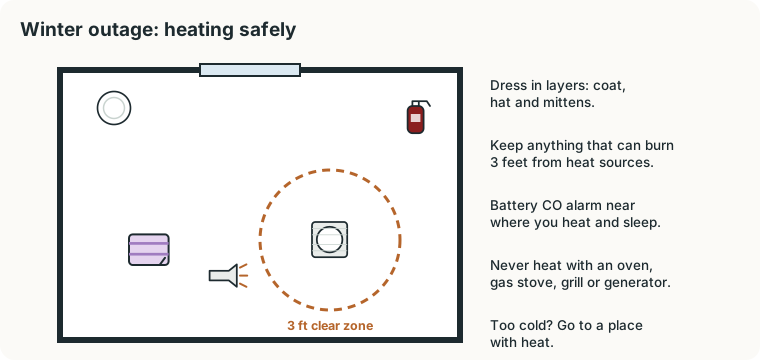
- Dress in layers: loose clothing, a coat, hat, and mittens.[4]
- Keep anything that can burn at least 3 feet from fireplaces, wood stoves, radiators, space heaters, and candles. Turn space heaters off when you leave the room or go to bed.[2]
- Never use an oven or gas stove to heat your home.[2][5] Never use a generator, outdoor stove, or heater meant for outdoors inside.[5]
- Don’t use portable flameless chemical heaters indoors.[3] All fuel-burning equipment should be vented to the outside.[1]
- Use flashlights, not candles.[6]
- Bring pets indoors.[1]
- If it’s too cold to stay, go to a community location with power or heat.[5]
Carbon monoxide symptoms are flu-like: headache, dizziness, weakness, upset stomach, vomiting, chest pain, and confusion. People who are asleep can die before they have symptoms.[3] If a CO alarm sounds, use the CO alarm card.
Where
Stay in the room you can keep warmest and safest: a working smoke alarm and CO alarm nearby, nothing that burns within 3 feet of a heater, and a clear way out. Check on neighbors and family who live alone.
Related
Winter storm guide · Power outage kit · Winter vehicle kit · Stranded in snow card
Sources
- CDC: Preparing for a Winter Storm
- U.S. Fire Administration: Heating Fire Safety
- CDC: Carbon Monoxide (CO) Poisoning Basics
- American Red Cross: Winter Storm Safety
- FEMA / Ready.gov: Power Outages
- American Red Cross: Power Outage Safety
Official pages checked 14 November 2026. Guidance changes; follow your local officials first. How we research.
Page checked on · Change log · Report an error · Calm by design